
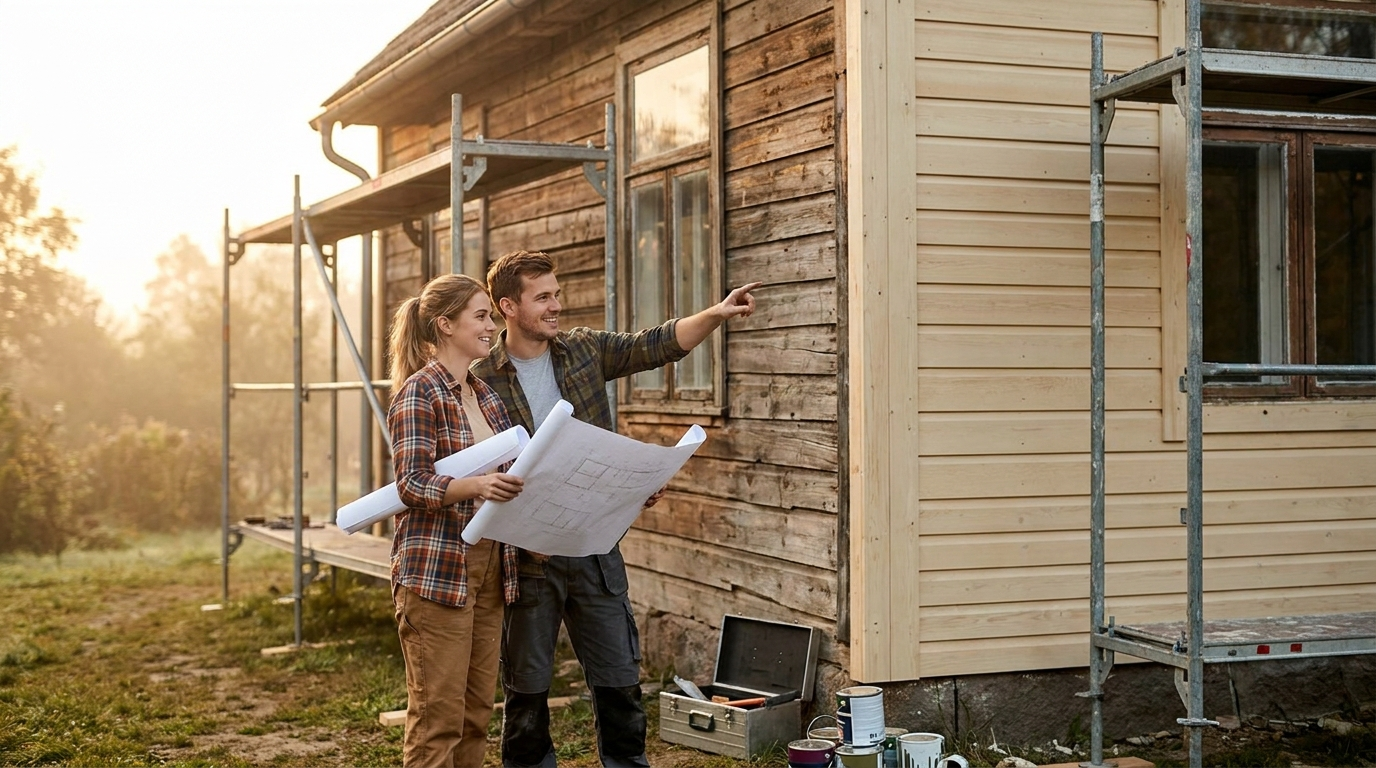
FHA 203k Loan: How to Buy a Fixer-Upper and Renovate With One Mortgage
An FHA 203(k) loan lets you purchase and renovate a fixer-upper with a single mortgage, combining acquisition and construction costs. This government-backed program requires just 3.5% down and allows borrowers to finance up to $150,000 in renovations, making homeownership accessible for budget-conscious buyers targeting undervalued properties.
What Is an FHA 203(k) Loan?
An FHA 203(k) loan is a government-backed mortgage that finances both the purchase price and renovation costs in one loan. Unlike traditional mortgages, it removes the burden of securing separate construction financing, allowing you to buy a property below market value and upgrade it to current standards. The Department of Housing and Urban Development (HUD) guarantees these loans, reducing lender risk and enabling competitive rates.
Who Qualifies for an FHA 203(k) Loan?
Borrowers need a minimum credit score of 580 (though 640+ secures better rates) and a debt-to-income ratio below 50%. You must have a valid Social Security number, be a U.S. citizen or permanent resident, and provide proof of stable income. Check your credit score for free using MyFreeScoreNow to assess your eligibility before applying. FHA loans don't require perfect credit—many borrowers with scores in the 600s qualify successfully.
Renovation Limits and Property Requirements
The maximum loan amount depends on your location, but most borrowers can finance up to $150,000 in repairs. However, properties must meet specific criteria: the home cannot be deemed uninhabitable in its current state, and major systems (electrical, plumbing, roof) must be functional. Minor cosmetic updates—flooring, paint, kitchen fixtures—qualify, as do structural repairs and HVAC replacements. HUD requires a professional inspection to approve the renovation scope.
FHA 203(k) vs. Traditional Home Loans: Quick Comparison
| Feature | FHA 203(k) | Conventional Loan | Renovation Loan |
|---|---|---|---|
| Down Payment | 3.5% | 5-20% | 15-20% |
| Credit Score Minimum | 580 | 620 | 660 |
| Renovation Financing | Included in Mortgage | Separate Loan Required | Included in Mortgage |
| Max Renovation Budget | Up to $150,000 | N/A | Varies by Lender |
| Property Condition | Must Be Habitable | Move-In Ready | Fixer-Upper Acceptable |
| Mortgage Insurance | Yes (0.85% annual) | Yes (if under 20% down) | Yes (if under 20% down) |
Steps to Secure Your FHA 203(k) Loan
First, find a lender approved for FHA loans and get pre-qualified with your financial documents. Then locate a property and hire a FHA-certified inspector to assess repairs. Next, submit a detailed scope of work with contractor estimates—this becomes binding on your final inspection. Once approved, you'll close on the purchase with a portion of funds held in escrow for renovations. During construction, the lender releases funds based on completed milestones. According to the National Association of REALTORS, 15% of home buyers in 2023 used FHA financing, reflecting its popularity among first-time purchasers.
Why Consider a 203(k) Loan? Key Advantages
This loan unlocks below-market properties in desirable neighborhoods where starter homes are scarce. You build equity faster by adding value through renovations, and a low down payment preserves cash for other investments. Use free credit tools like Monarch's credit monitoring to track your score improvement post-closing. The single mortgage simplifies finances and typically carries lower rates than separate construction loans.
Frequently Asked Questions
Can I use an FHA 203(k) loan on a commercial property? No—this loan exclusively finances owner-occupied primary residences. Investment properties and second homes don't qualify.
What if renovation costs exceed my estimate? You cannot exceed the approved amount without formal amendment, so accurate contractor quotes are critical. Always include a 10-15% contingency buffer.
How long does the renovation process take? Most projects close within 6-12 weeks, depending on scope. The lender sets a deadline (typically 6 months) for completing all work.
Ready to turn your dream fixer-upper into reality? Connect with an FHA-approved lender today to explore your renovation options. Pre-qualification is free and takes minutes—start building wealth through homeownership with an FHA 203(k) loan.
Ready to take the next step?
Try the tool from this post — or talk strategy with the ShiftRich team.
Book a Free Strategy Call →