
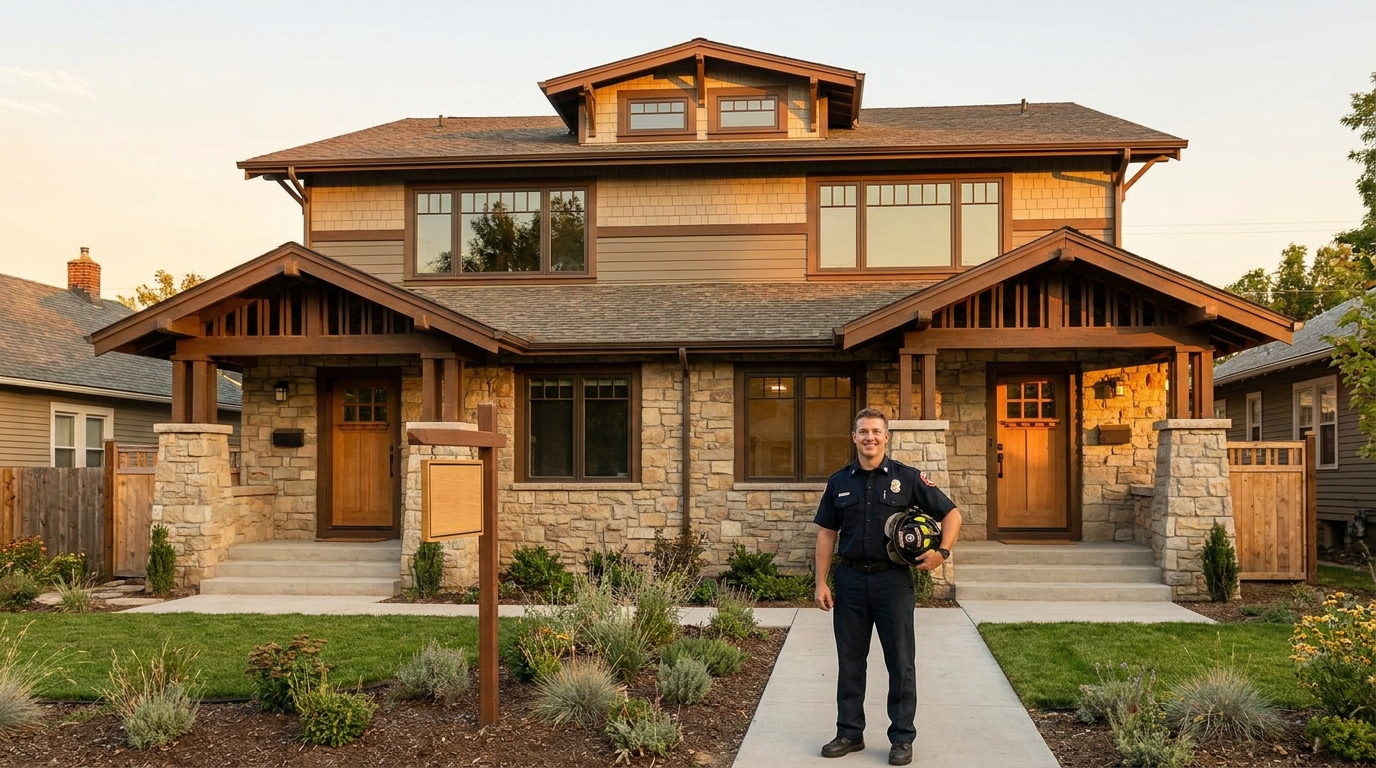
First Responders: How to House Hack Your Way to Financial Freedom
House hacking—renting out portions of your primary residence—lets first responders leverage their stable income to build wealth fast. By covering your mortgage with tenant rent, you eliminate housing costs and accelerate your path to financial independence within 5-10 years.
What Is House Hacking and Why Does It Work for First Responders?
House hacking turns your home into an income-producing asset. You live in one unit while renting others, letting tenants cover your mortgage and expenses. First responders benefit uniquely: steady paychecks, respected credit profiles, and disciplined mindsets make lenders eager to approve these investments. According to the National Association of Realtors, 34% of first-time home buyers plan to use their property as a rental within five years.
Start with a Duplex or Multi-Unit Property
Duplexes and triplexes offer lower entry barriers than single-family homes. Finance one unit as your residence while renting the others—your tenant's rent directly offsets your mortgage payment. First responders typically qualify for conventional loans with 15-20% down, making a $300,000 duplex achievable with $45,000-$60,000 saved. Use Deal Machine to identify off-market properties quickly.
Leverage FHA Loans and First-Responder Programs
FHA loans allow 3.5% down payments—perfect for first responders stretching capital. Many states and municipalities offer firefighter and police officer down-payment assistance programs covering 5-10% additional funds. Combined, you can buy with under 5% out-of-pocket while keeping cash reserves for repairs and vacancies.
Build Your Team: Property Manager and Accountant
Your shifts don't accommodate tenant calls and maintenance emergencies. Hire a property manager earning 8-10% of rent to handle everything while you focus on your primary career. A tax professional maximizes deductions—mortgage interest, property taxes, repairs, and depreciation can offset rental income entirely, creating phantom losses that shelter other earnings.
Model the Numbers: Real Income Impact
| Property Type | Purchase Price | Monthly Rent (Unit B) | Your Mortgage | Net Monthly Gain | 5-Year Equity Build |
|---|---|---|---|---|---|
| Duplex | $320,000 | $1,800 | $1,650 | $150 | $89,000 |
| Triplex | $450,000 | $1,800 x 2 | $2,200 | $1,400 | $156,000 |
| Fourplex | $580,000 | $1,700 x 3 | $2,800 | $2,300 | $198,000 |
Scale Strategically: Repeat the Process
After three years, refinance your house hack at appreciated value. Pull out $50,000-$100,000 in equity and repeat with property two. In 10 years, three house hacks generate $3,500+ monthly passive income—supplementing your first-responder salary toward early retirement. Read "House Hacking 101" to deepen your strategy.
FAQ
Can I house hack while working full-time as a firefighter?
Yes. Hire a property manager to handle day-to-day operations. They communicate with tenants, collect rent, and schedule repairs—freeing you to focus on your shifts.
What's the minimum down payment for first responders?
FHA loans accept 3.5% down; many first-responder programs add 5-10% assistance, reducing your out-of-pocket to under $15,000 on $300,000+ properties.
How quickly does house hacking build wealth?
Aggressively—three properties in 10 years can generate $3,000-$5,000 monthly passive income, reducing your dependence on active income before retirement.
Your Path Forward
House hacking transforms first responders from homeowners into investors. Your stable income, strong credit, and disciplined nature position you perfectly for multi-unit real estate. Start researching duplexes today, connect with a loan officer familiar with first-responder programs, and secure your financial future while protecting your community. The next income-producing property awaits.
Ready to take the next step?
Try the tool from this post — or talk strategy with the ShiftRich team.
Book a Free Strategy Call →